Don Chisciotte e la ferita della Modernità
DOI:
https://doi.org/10.7413/228181381906Parole chiave:
Imaginary | Modernity | Social Change and Art | Social Systems | ComplexityAbstract
Quixote and the wound of Modernity.
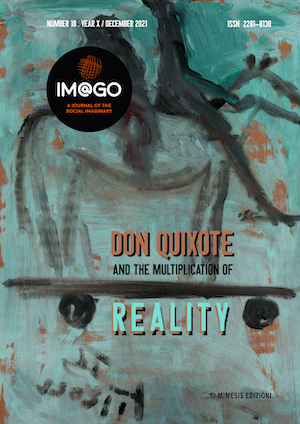
Don Quixote, in addition to being a literary masterpiece, is also an inexhaustible epistemic reservoir that we need to draw on in order to understand what the relationship between imaginary and reality is made of and the peculiar way it is articulated in different eras, not only in Modernity. In this essay - from the perspective of Social Theory and the Social Change analysis - I will try to highlight how Cervantes' novel anticipates by many centuries what will be the most important epistemological (and aesthetic) acquisitions of the 20th century. Don Quixote is, from this point of view, a poetic treatise on the epistemology of complexity that reveals, in its folds, the mechanisms of functioning of complex systems and the paradoxes that are produced in them.
After mentioning what makes this work unique in the cultural landscape of any age, I will therefore dwell on its great epistemic legacy. In addition to having made it possible to highlight the existence of multiple realities (Schütz, 2008), it consists in having created an immortal mimetic device that ostensibly illustrates the co- essentiality and secret relationships between reality and the imaginary, anticipating the relational and systemic character of social reality and the risks that lurk in the inauspicious treatment of its complexity.
Dowloads
Pubblicato
Fascicolo
Sezione
Licenza
Quest'opera è distribuita con Licenza Creative Commons Attribuzione 4.0 Internazionale.
L'autore conserva il copyright sul suo contributo, consentendo tuttavia a chiunque "di riprodurre, distribuire, comunicare al pubblico, esporre in pubblico, rappresentare, eseguire e recitare l'opera", purché siano correttamente citati l'autore e il titolo della rivista.
L’autore, al momento della proposta di pubblicazione, è inoltre tenuto a dichiarare che il contenuto e l’organizzazione dell’opera è originale e non compromette in alcun modo i diritti di terzi, né gli obblighi connessi alla salvaguardia di diritti morali ed economici di altri autori o di altri aventi diritto, sia per testi, immagini, foto, tabelle, sia per altre parti di cui il contributo può essere composto. L’autore dichiara altresì di essere a conoscenza delle sanzioni previste dal codice penale e dalle leggi speciali per l’ipotesi di falsità in atti ed uso di atti falsi, e che pertanto la rivista è esente da qualsiasi responsabilità di qualsivoglia natura, civile, amministrativa o penale, e sarà dall'autore tenuta indenne da qualsiasi richiesta o rivendicazione da parte di terzi.