
Thanatogenic Anthrosols: a geoforensic approach to the exploration of the Sepolcreto of the Ca’ Granda (Milan)
DOI:
https://doi.org/10.1478/AAPP.101S1A8Parole chiave:
Thantogenic Anthrosols, Ca' Granda (Milan, Italy), SEM-EDS, Anthropology, DecompositionAbstract
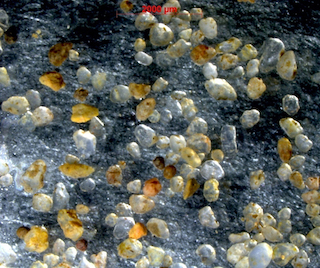
Soil is a dynamic matrix which can rapidly respond to disturbance events, such as the death and the deposition of an organism. Moreover, soil can be considered an archive of data due to its ability to record the traces of disturbance events. Accordingly, the biogeochemical analysis of the geopedological evidence could turn into a valuable tool for the study of decomposition processes. Hence, the aim of the present research is to detect the evidence of material exchange, linked to decomposition, between the bone tissue from two skeletal remains of the Sepolcreto (i.e., burial ground) in the crypt of the Ca’ Granda (Milan, Italy), and the pedosedimentary matrix from the stratigraphic unit US3 in which they were immersed. Both biological and geopedological specimens were analysed using a Scanning Electron Microscope equipped with facility for energy-dispersive spectroscopy (SEM-EDS) which pointed out the presence of a mutual exchange of material between the two substrates, underlying the intensity of the interaction between organisms (even if dead) and the environment in which they are located. The results were also able to lead to the detection of an inedited kind of material, mainly composed of organic matter resulted from the decomposition of human remains and preserved bone and soft tissues, which could be considered for introducing a new type of Anthrosol.
Dowloads
Pubblicato
Fascicolo
Sezione
Licenza

This work is licensed under a Creative Commons Attribution 4.0 International License.
- Authors retain copyright and grant the journal right of first publication with the work simultaneously licensed under a Creative Commons Attribution License that allows others to share the work with an acknowledgement of the work's authorship and initial publication in this journal.
- Authors are able to enter into separate, additional contractual arrangements for the non-exclusive distribution of the journal's published version of the work (e.g., post it to an institutional repository or publish it in a book), with an acknowledgement of its initial publication in this journal.
- Authors are permitted and encouraged to post their work online (e.g., in institutional repositories or on their website) prior to and during the submission process, as it can lead to productive exchanges, as well as earlier and greater citation of published work (See The Effect of Open Access).
