
Palaeontology applied to criminal investigation
DOI:
https://doi.org/10.1478/AAPP.101S1A4Parole chiave:
Forensic Sciences, Criminalistics, Crime Scene, Geoforensics, Palaeontology, Taphonomy, Fossils, Fakes, FraudsAbstract
Forensic palaeontology may be applied to the scientific investigation of outdoor crime scenes because of the potential presence of geological trace evidence on victims and perpetrators due to the trace transfer from the crime scene, as a consequence of the Locard principle. Experts in palaeontology can effectively contribute to criminal investigation: i) determining the age and provenance of microfossils for comparative purposes of geological evidence, ii) characterizing the fossils suspected to be object of illegal activities and frauds, iii) characterizing the taphonomy of the evidence especially in the clandestine graves. In this last case, the contribute is more effective if investigation carried out by palaeontologists and geologists is provided by a team of experts that in cases of corpse concealment may be composed of forensic taphonomists, archaeologists, physical anthropologists, and entomologists. The present paper illustrates the main applications of palaeontology in forensics, and reports and discusses some case studies.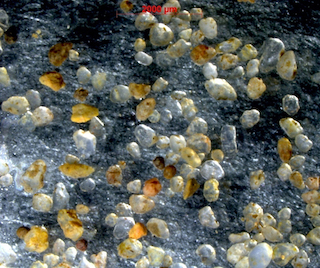
Dowloads
Pubblicato
2023-09-12
Fascicolo
Sezione
Advances and Applications in Geoforensics: Unraveling Crimes with Geology (Conference Proceedings)
Licenza

This work is licensed under a Creative Commons Attribution 4.0 International License.
- Authors retain copyright and grant the journal right of first publication with the work simultaneously licensed under a Creative Commons Attribution License that allows others to share the work with an acknowledgement of the work's authorship and initial publication in this journal.
- Authors are able to enter into separate, additional contractual arrangements for the non-exclusive distribution of the journal's published version of the work (e.g., post it to an institutional repository or publish it in a book), with an acknowledgement of its initial publication in this journal.
- Authors are permitted and encouraged to post their work online (e.g., in institutional repositories or on their website) prior to and during the submission process, as it can lead to productive exchanges, as well as earlier and greater citation of published work (See The Effect of Open Access).
