
Recent advances in Forensic Geology and Botany for the reconstruction of event dynamics in outdoor crime scenes: A case study
DOI:
https://doi.org/10.1478/AAPP.101S1A10Keywords:
Forensic Geology, Forensic Botany, Forensic Sciences, Criminalistics, Geological and Soil Evidence, Botanical EvidenceAbstract
The present research is devoted to criminal investigation regarding the disappearance of two persons suspected to be kidnapped. The multi-disciplinary investigation based on the application of Forensic Geology and Botany allowed to ascertain the pre-mortem active presence of the victims on the event scene. The results of the geological and botanical characterization accomplished on the traces collected on the victims and their belongings (unknown samples) and soils and plants sampled on the scene of events (known samples), allowed to ascertain with a high degree of compatibility as the source of the unknown samples could derive from environments with characteristics similar to those found in the scene of events, suggesting a same common origin for the analysed unknown and known specimens. Peculiar minerals (calcium phosphate rich clays and dolostones), very abundant vegetal particles (thorns and seeds of Erica arborea), and algae associations were particularly useful in linking the victims to the scene of events. The results of the comparative analyses provided fundamental info-investigative data useful for establishing the pre-mortem active presence of the victims on the scene. Furthermore, the most significant positive matches found allowed reconstructing a very detailed walking carried out by the two victims on the event site in the hours immediately preceding their death. These implications were of paramount importance for the judicial system in the solution of this criminal case. The careful examination of mineral composition, textural features as well as of the peculiar assemblages of inorganic and vegetal materials from unknown and known specimens carried out in the case work revealed to be able to provide very strong geological and botanical evidence for supporting criminal investigations. These robust results were achieved by the experts involved in long time-consuming and careful activities and examinations. Furthermore, the geological and botanical investigation carried out demonstrated as the analyses of the relationships ascertained between the victims and the surrounding environment could also support the coroner’s decision on the manner of death and facilitating the understanding of the event dynamics.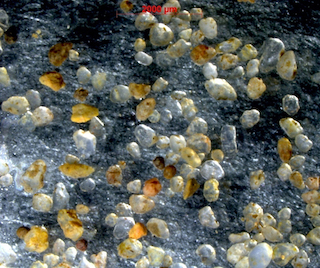
Downloads
Published
2023-09-12
Issue
Section
Advances and Applications in Geoforensics: Unraveling Crimes with Geology (Conference Proceedings)
License

This work is licensed under a Creative Commons Attribution 4.0 International License.
- Authors retain copyright and grant the journal right of first publication with the work simultaneously licensed under a Creative Commons Attribution License that allows others to share the work with an acknowledgement of the work's authorship and initial publication in this journal.
- Authors are able to enter into separate, additional contractual arrangements for the non-exclusive distribution of the journal's published version of the work (e.g., post it to an institutional repository or publish it in a book), with an acknowledgement of its initial publication in this journal.
- Authors are permitted and encouraged to post their work online (e.g., in institutional repositories or on their website) prior to and during the submission process, as it can lead to productive exchanges, as well as earlier and greater citation of published work (See The Effect of Open Access).
