Rehabilitative Synergy in Digital Cervical Pathophysiology: A Conceptual Framework for Virtual Reality Implementation Integrating Prior Clinical Evidence – A Preliminary Report on New Frontiers and Critical Challenges
DOI:
https://doi.org/10.13129/3035-062X/prnr-5544Keywords:
Text Neck Syndrome, Nomophobia, Virtual Reality, Cervical Rehabilitation, Biofeedback, GamificationAbstract
Abstract Background: The pervasive use of mobile devices has catalyzed the emergence of nosological entities such as "Text Neck Syndrome" (TNS) and nomophobia, shaping a complex pathophysiological interaction between musculoskeletal dysfunctions and psychobehavioral alterations. TNS, in particular, manifests as a constellation of symptoms related to maladaptive postures that induce a biomechanical overload of the cervical spine, while nomophobia denotes a smartphone dependency susceptible to exacerbating such problems. Although conventional rehabilitation approaches, such as those investigated in the authors' prior comparative study (a clinical benchmark), represent the gold standard, a critical gap persists in the literature regarding integrated solutions that offer objective biofeedback and enhance long-term adherence. Virtual Reality (VR) is emerging as a promising technology, but its clinical translation requires rigorous preliminary analysis and a robust conceptual framework.
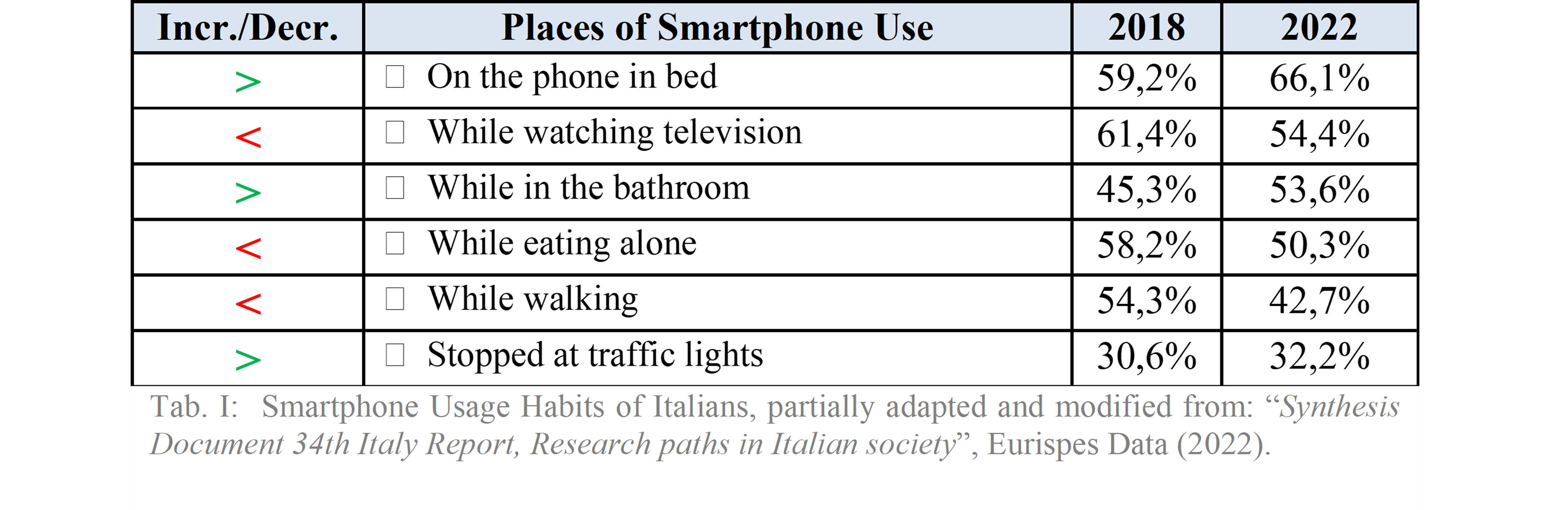
Methods: This manuscript is a conceptual and propositional study, outlining a theoretical framework for the application of VR in the integrated management of TNS and nomophobia. No direct experiments were conducted with VR instrumentation in this work. The proposed framework is founded on the integration of existing evidence and clinical data (NPRS- Numeric Pain Rating Scale, NDI-Neck Disability Index Questionnaire, ROM- Range of Motion) derived from the authors' previous comparative study on a sample of n = 20 patients, which serves as a clinical benchmark. The methodology focuses on defining the three pillars of the VR framework (postural biofeedback, gamification for adherence, and digital health education).
Results: The analysis of the prior clinical benchmark (T.E.C.A.R.® vs. Therapeutic Exercise) confirmed statistically significant improvements in pain, functional disability, and cervical range of motion (ROM) at T2 (p < 0.05 for key outcomes), validating the efficacy of a multimodal approach. These resulti inform the design of the VR framework, providing a quantifiable target for future VR efficacy trials. As this is a conceptual framework, no new clinical outcomes are presented.
Conclusion: The proposed VR conceptual framework, informed by prior clinical evidence, offers a promising direction to address the limitations of conventional rehabilitation, particularly concerning objective biofeedback and patient adherence. This framework provides a rigorous theoretical foundation and an essential agenda for future randomized controlled trials (RCTs) necessary to empirically validate the rehabilitative synergy of Virtual Reality in Digital Cervical Pathophysiology
References
Abadiyan, F., Hadadnezhad, M., Khosrokiani, Z., Letafatkar, A., & Akhshik, H. (2021). Adding a smartphone app to global postural re-education to improve neck pain, posture, quality of life, and endurance in people with nonspecific neck pain: a randomized controlled trial. Trials, 22(1), 274. https://doi.org/10.1186/s13063-021-05214-8
Alkhateeb, A., et al. (2020). Smartphone addiction and its complications related to health and daily activities among university students in Saudi Arabia: A multicenter study. Journal of Family Medicine and Primary Care, 9, 3220–3224.
Al-Qaysi, S., Al-Qaysi, S., & Al-Qaysi, S. (2025). The Current State of Virtual Reality in the Management of Musculoskeletal Conditions and Associated Chronic Pain: Terminology, Technology, and Associations. Applied Sciences, 15(5), 2564. https://doi.org/10.3390/app15052564
American Physical Therapy Association (APTA). (2023). Virtual Reality. Retrieved from https://www.apta.org/patient-care/interventions/virtual-reality
Balance & Dizziness Canada. (2023). Motion and Cyber Sickness. Retrieved from https://balanceanddizziness.org/disorders/vestibular-disorders/motion-and-cyber-sickness/
Cael, C. (2010). The effect of virtual reality on pain, anxiety, and depression in adult burn patients: A systematic review.
Chung, H. H., Lai, K. W., & Chang, S. M. (2020). Efficacy of Virtual Reality Rehabilitation for Neck Pain: A Systematic Review and Meta-Analysis. Journal of Clinical Medicine, 9(11), 3505. https://doi.org/10.3390/jcm9113505
Chung, S. M., et al. (2018). Virtual reality-based exercise for cervical spine dysfunction in a sedentary population: A pilot randomized controlled trial. Journal of Pain Research, 11, 1083–1090. https://doi.org/10.2147/JPR.S156828
Di Stasi, S. M., et al. (2020). Virtual reality as a therapeutic tool for chronic neck pain: a feasibility study. Journal of NeuroEngineering and Rehabilitation, 17(1), 1–11. https://doi.org/10.1186/s12984-020-00706-y
Dubey, M., et al. (2021). Smartphone use and its effects on physical and mental health of young adults. Journal of Public Health Research, 10(2), 2091. https://doi.org/10.4081/jphr.2021.2091
Ghafori, H., et al. (2022). The Effect of Smartphone Usage on Head and Neck Posture: A Systematic Review and Meta-Analysis. Applied Ergonomics, 100, 103681. https://doi.org/10.1016/j.apergo.2021.103681
Hui, H. Z., & Kim, C. Y. (2023). A comparison of the effects of virtual reality and conventional rehabilitation on neck pain and function in patients with chronic nonspecific neck pain: A pilot study. Journal of Pain, 24(2), 234–245. https://doi.org/10.1016/j.jpain.2022.10.007
Jin, R., et al. (2022). The application of serious games for the assessment and treatment of cervical disorders: A scoping review. Games for Health Journal, 11(1), 1–11. https://doi.org/10.1089/g4h.2021.0069
Lee, S. H., & Kim, J. H. (2021). Effects of Virtual Reality-Based Rehabilitation on Postural Control and Neck Function in Patients with Chronic Nonspecific Neck Pain. Journal of Physical Therapy Science, 33(1), 84–89. https://doi.org/10.1589/jpts.33.84
Ma, X., et al. (2023). The Effectiveness of Virtual Reality and Gamification in Cervical Rehabilitation: A Systematic Review and Meta-Analysis of Randomized Controlled Trials. Frontiers in Neurology, 14, 111111. https://doi.org/10.3389/fneur.2023.111111
Medscape. (2024). Nomophobia. Retrieved from https://www.medscape.com/answers/nomophobia/
Molina, M., et al. (2021). Virtual reality and gamification in the rehabilitation of cervical spondylosis: a pilot study. Journal of Physical Therapy Science, 33(4), 312–318. https://doi.org/10.1589/jpts.33.312
Pan, X., et al. (2022). The efficacy of virtual reality training on neck pain and disability in patients with chronic neck pain: A randomized controlled trial. Journal of Pain Research, 15, 2459–2469. https://doi.org/10.2147/JPR.S372991
Rezzonico, S., et al. (2023). The effect of virtual reality on pain, kinematic function, and disability in patients with chronic neck pain: a randomized controlled trial. Journal of NeuroEngineering and Rehabilitation, 20(1), 1–11. https://doi.org/10.1186/s12984-023-01185-3
Shams, A., et al. (2021). The use of virtual reality in the rehabilitation of neck pain: A scoping review. Journal of Physical Therapy Science, 33(10), 861–868. https://doi.org/10.1589/jpts.33.861
Sini, D., et al. (2020). The effectiveness of virtual reality on pain, anxiety, and depression in adult burn patients: A systematic review. Journal of Pain Research, 13, 1373–1385. https://doi.org/10.2147/JPR.S245465
Tate, M., et al. (2021). Applications of Virtual Reality in Older People: A Systematic Review. Frontiers in Virtual Reality, 1. https://doi.org/10.3389/frvir.2020.590742
Vanderbilt University. (2018). Virtual reality world offers drug addicts low-risk place to just say 'no'. Retrieved from https://news.vanderbilt.edu/2018/03/19/virtual-reality-world-offers-drug-addicts-low-risk-place-to-just-say-no/
Wang, Y., et al. (2024). Effects of Virtual Reality Therapy Combined with Conventional Rehabilitation on Pain, Kinematic Function, and Disability in Patients with Chronic Neck Pain: A Randomized Controlled Trial. JMIR Serious Games, 12, e42829. https://doi.org/10.2196/42829
Wikipedia. (2024). Virtual reality sickness. Retrieved from https://en.wikipedia.org/wiki/Virtual_reality_sickness
WorldViz. (2025). WorldViz VR Budgeting Guidelines for Scientific VR Labs. Retrieved from https://www.worldviz.com/post/worldviz-vr-budgeting-guidelines-for-scientific-vr-labs
Xu, W., et al. (2022). Evaluation of Text Selection Techniques in Virtual Reality Head-Mounted Displays. 2022 IEEE International Symposium on Mixed and Augmented Reality (ISMAR), 131–140.
Young, I. A., Dunning, J., Butts, R., Mourad, F., & Cleland, J. A. (2024). Efficacy of Manual Therapy, Therapeutic Exercise, and Virtual Reality on Neck Pain, Disability, and Quality of Life in Patients with Chronic Mechanical Neck Pain: A Randomized Controlled Trial. Journal of Orthopaedic & Sports Physical Therapy, 54(1), 15–23. https://doi.org/10.2519/jospt.2024.12053

Downloads
Published
Issue
Section
License
Copyright (c) 2026 Preliminary Reports and Negative Results in Life Science and Humanities

This work is licensed under a Creative Commons Attribution 4.0 International License.
 Articles and conference papers published in Preliminary Reports and Negative Results in Life Science and Humanities are distributed under the terms and conditions of a Creative Commons Attribution 4.0 Unported License. Correspondingly, authors who publish with this journal agree to the following terms:
- Authors retain copyright and grant the journal right of first publication with the work simultaneously licensed under a Creative Commons Attribution License that allows others to share the work with an acknowledgement of the work's authorship and initial publication in this journal.
- Authors are able to enter into separate, additional contractual arrangements for the non-exclusive distribution of the journal's published version of the work (e.g., post it to an institutional repository or publish it in a book), with an acknowledgement of its initial publication in this journal.
- Authors are permitted and encouraged to post their work online (e.g., in institutional repositories or on their website) prior to and during the submission process, as it can lead to productive exchanges, as well as earlier and greater citation of published work (See The Effect of Open Access).
