
Slow dynamics of supercooled trehalose hydration water in comparison with bulk water
DOI:
https://doi.org/10.1478/AAPP.98S1A8Keywords:
hydration water, glassy dynamics, trehalose, dynamical transitionAbstract
Trehalose aqueous solutions are relevant in many technological applications, for example in cryopreservation of biomolecules. It is known that the presence of this disaccharide is able to slow down the dynamics of nearby water molecules and to modify their spatial rearrangement, nevertheless, a complete understanding of the properties of water-trehalose solutions and of trehalose cryoprotective properties is still lacking. Here we discuss recent molecular dynamics simulation results of water-trehalose solutions, performed at different temperatures upon cooling, and we compare the results with the behavior of the bulk phase. In particular we focus on the dynamical properties of hydration water, i.e., the water molecules in the hydration shell of the disaccharide. Hydration water shows a sub-diffusive behavior with respect to bulk water, the same structural relaxation typical of glass formers liquids, albeit slightly slower than in the bulk, and an additional relaxation process at longer timescales completely absent in the bulk. The analysis of hydrogen bond autocorrelation functions allows to connect the structural and long relaxation processes of hydration water to the dynamics of two distinct population of hydrogen bonds in the system, the water-water and water-trehalose hydrogen bonds.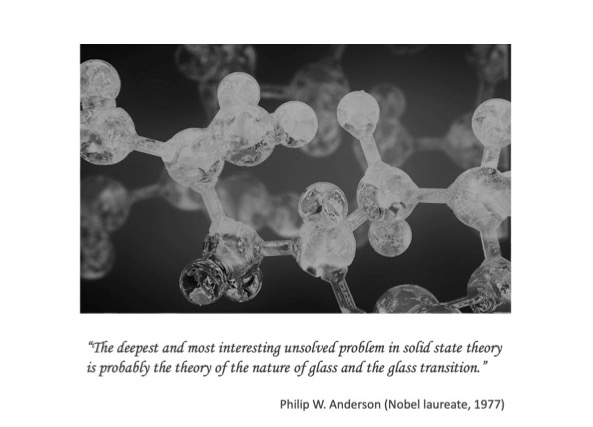
Downloads
Published
2020-10-01
Issue
Section
Glasses & Polymers: The Science of Disorder (Conference Proceedings)
License

This work is licensed under a Creative Commons Attribution 4.0 International License.
- Authors retain copyright and grant the journal right of first publication with the work simultaneously licensed under a Creative Commons Attribution License that allows others to share the work with an acknowledgement of the work's authorship and initial publication in this journal.
- Authors are able to enter into separate, additional contractual arrangements for the non-exclusive distribution of the journal's published version of the work (e.g., post it to an institutional repository or publish it in a book), with an acknowledgement of its initial publication in this journal.
- Authors are permitted and encouraged to post their work online (e.g., in institutional repositories or on their website) prior to and during the submission process, as it can lead to productive exchanges, as well as earlier and greater citation of published work (See The Effect of Open Access).
