
Unraveling crimes with Geosciences
DOI:
https://doi.org/10.1478/AAPP.101S1A2Keywords:
Forensic Sciences, Criminalistics, Forensic Geology, Crime Scene Investigation, Geological and Soil EvidenceAbstract
The Forensic Sciences play an important and unique role in the Justice System, a role that refers to the expert’s ability to provide accurate and objective information reflecting facts and events that occurred during the happening of a crime. These sciences include Criminology and Criminalistics. Forensic Geology is a discipline, 150 years old, applied to criminalistics. It applies scientific principles of Earth Sciences to solve criminal cases. Main activities carried out by forensic geologists concern sedimentological, palaeontological, mineralogical, petrographic, and geochemical analyses, geophysical surveys, and remote sensing inspections. These investigations are used for solving crimes, such as homicides, corpse concealments, kidnappings, hit and run incidents, sexual assaults, counterterrorism, animal maltreating and wildlife crimes, robberies, thefts in apartments, vandalism, stone-throwings, frauds and financial crimes, and environmental damages. The present research illustrated the main activities carried out in Forensic Geology and selected some international and national cases carried out in the last 150 years by forensic geologists, for providing an overview of the scientific approaches, methods, and potentialities.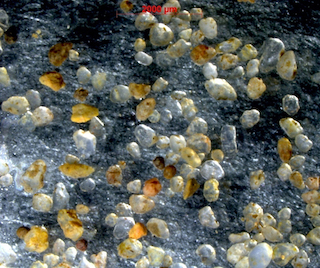
Downloads
Published
2023-09-12
Issue
Section
Advances and Applications in Geoforensics: Unraveling Crimes with Geology (Conference Proceedings)
License

This work is licensed under a Creative Commons Attribution 4.0 International License.
- Authors retain copyright and grant the journal right of first publication with the work simultaneously licensed under a Creative Commons Attribution License that allows others to share the work with an acknowledgement of the work's authorship and initial publication in this journal.
- Authors are able to enter into separate, additional contractual arrangements for the non-exclusive distribution of the journal's published version of the work (e.g., post it to an institutional repository or publish it in a book), with an acknowledgement of its initial publication in this journal.
- Authors are permitted and encouraged to post their work online (e.g., in institutional repositories or on their website) prior to and during the submission process, as it can lead to productive exchanges, as well as earlier and greater citation of published work (See The Effect of Open Access).
