
Macrobotanic data implementing Forensic Geology investigations
DOI:
https://doi.org/10.1478/AAPP.101S1A13Abstract
The contribution of botany to the analysis of geological traces should not be neglected in forensic investigations. Small plant traces, especially if widespread in quantity, easily adhere to the subjects involved in criminal events. However, the identification of highly fragmentated plant structures often relies to skilled experts. The present paper deals with the morphological descriptions of thorns and similar plant appendices produced by the plants thriving in the area under investigation in a court case regarding the disappearance of two subjects in a rural area of the countryside. Comparative observations between unknown and known samples, related to victims and crime scene respectively, made it possible to identify traces found on the victims as plants thriving in the area under investigations. Basing on the punctual distribution of individual plants in the investigated territory, the results of the comparative analyses allowed to reconstruct the victims’ path in the hours immediately preceding their death. Consequently, these data provided valuable information for implementing the geological investigation carried out for the judicial authority.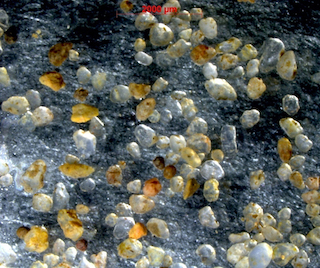
Downloads
Published
2023-09-12
Issue
Section
Advances and Applications in Geoforensics: Unraveling Crimes with Geology (Conference Proceedings)
License

This work is licensed under a Creative Commons Attribution 4.0 International License.
- Authors retain copyright and grant the journal right of first publication with the work simultaneously licensed under a Creative Commons Attribution License that allows others to share the work with an acknowledgement of the work's authorship and initial publication in this journal.
- Authors are able to enter into separate, additional contractual arrangements for the non-exclusive distribution of the journal's published version of the work (e.g., post it to an institutional repository or publish it in a book), with an acknowledgement of its initial publication in this journal.
- Authors are permitted and encouraged to post their work online (e.g., in institutional repositories or on their website) prior to and during the submission process, as it can lead to productive exchanges, as well as earlier and greater citation of published work (See The Effect of Open Access).
