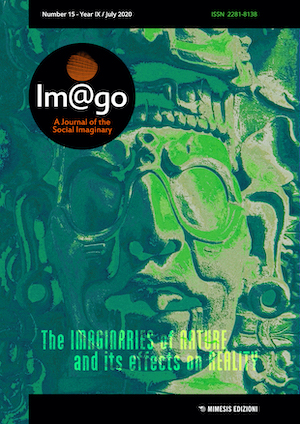
L’ecosophie d’Avatar. Science-fiction, nature et vie quotidienne
DOI:
https://doi.org/10.7413/22818138171Parole chiave:
Tecnomagic | Posthuman | Ecosophy | Cinema| ImaginaryAbstract
Ecosophy of Avatar. Science-fiction, nature and everyday life. More than a century after its dawn, with Avatar (2009) cinema has returned to emanate the amazement of its origins, wrapping the viewer in a plot of synaesthesia that evokes the overwhelming effect provoked in the room by L'Arrivée d'un train en gare de La Ciotat by the Lumière brothers (1895) and recalls the wonder sown in the audience by Le voyage dans la lune di Méliès (1902). James Cameron's film, awarded by the box office but neglected by critics, was the first to propose a reading that is as transversal as it is innovative of the relationship between the media audience, the system of objects and the environment, tracing a scenario that can correspond with the contemporary imaginary and with the practices of everyday life. The film crystallizes the ecosophical sensitivity emerging in contemporary scenarios in the intertwining between the extension of the system of objects, the mediatization of existence and the overbearing return of nature in the speeches, aesthetics and practices of our culture.
Dowloads
Pubblicato
Fascicolo
Sezione
Licenza
Quest'opera è distribuita con Licenza Creative Commons Attribuzione 4.0 Internazionale.
L'autore conserva il copyright sul suo contributo, consentendo tuttavia a chiunque "di riprodurre, distribuire, comunicare al pubblico, esporre in pubblico, rappresentare, eseguire e recitare l'opera", purché siano correttamente citati l'autore e il titolo della rivista.
L’autore, al momento della proposta di pubblicazione, è inoltre tenuto a dichiarare che il contenuto e l’organizzazione dell’opera è originale e non compromette in alcun modo i diritti di terzi, né gli obblighi connessi alla salvaguardia di diritti morali ed economici di altri autori o di altri aventi diritto, sia per testi, immagini, foto, tabelle, sia per altre parti di cui il contributo può essere composto. L’autore dichiara altresì di essere a conoscenza delle sanzioni previste dal codice penale e dalle leggi speciali per l’ipotesi di falsità in atti ed uso di atti falsi, e che pertanto la rivista è esente da qualsiasi responsabilità di qualsivoglia natura, civile, amministrativa o penale, e sarà dall'autore tenuta indenne da qualsiasi richiesta o rivendicazione da parte di terzi.